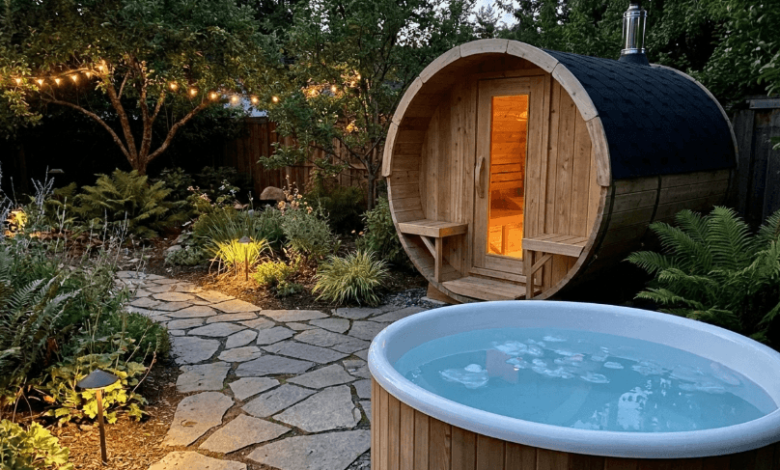
For a household of three or more sharing a tight footprint, a three to four person barrel or cabin sauna in the 6 to 8 foot range is usually the sweet spot, seating everyone at once without needing more than roughly 30 to 40 square feet of yard or garage space. Going smaller to save money almost always backfires, because a unit that only fits two people quietly turns into a unit only one or two family members ever use. The decision that matters most for shared use is bench layout and door width, not just the capacity number printed on the listing.
How Many People Really Fit in Each Sauna Size?
Manufacturer capacity numbers describe how many bodies can physically be seated, not how comfortable that seating is for a full session. A two-person infrared cabin gives each occupant roughly 20 inches of bench width, workable for two adults but tight the moment a third person tries to join. A three-person barrel sauna splits its curved interior into facing benches, which in practice seats two adults plus a child, or two adults who want more shoulder room. Four-person cabins step up to an L-shaped or two-tier bench arrangement, which is where most families actually land once they factor in that not everyone wants to sit in at the same time anyway.
Barrel or Cabin: Which Layout Suits a Shared Sauna?
A barrel sauna’s curved wall lets bench seating run the full length on both sides, which packs more usable seating into a given footprint than a rectangular box of the same square footage. That efficiency comes with a tradeoff: the curved ceiling reduces headroom toward the outer edges, and taller household members notice it quickly. A rectangular cabin sauna uses its square footage less efficiently but keeps full headroom everywhere inside and generally accepts a wider door, which matters if anyone in the household uses a wheelchair or a parent needs to carry a small child in and out. Families choosing between the two should sit inside a floor model if at all possible, since bench comfort is hard to judge from a spec sheet alone.
How Should a Family Divide Sauna Time Fairly?
Most households do not run every member through the sauna at the same temperature or on the same schedule, and that is fine. A shared unit runs one heater at one setting for the room, so families with younger kids typically schedule a cooler, shorter session together in the early evening, then let teens and adults run a longer or hotter session on their own later. Setting this rotation as a household habit before the unit arrives, rather than negotiating it fresh every week, is what keeps a shared sauna in regular use instead of becoming one person’s solo hobby.
What Does a Household-Size Small Sauna Cost?
A three-person barrel or cabin unit with an electric heater typically costs more than a compact one or two person model, both in unit price and in the electrical work needed to run it, since most heaters sized for three or more people move into the 6 to 8 kilowatt range and require a dedicated 240V circuit. Families weighing that jump against a smaller unit should factor in usage, not just sticker price. A slightly larger unit the whole household actually uses two or three times a week delivers more real value than a cheaper unit that only one person ever climbs into. Once the household has settled on a target size, see the full lineup to compare three and four person models against the footprint measured at home.
What Mistakes Do Families Make When Sizing a Shared Sauna?
The single most common regret is buying a two-person unit for a household of four, which technically fits two people but leaves everyone else waiting outside, and that friction is usually what kills the habit within a few months. The second most common mistake is skipping the door-width check, since a narrow door that works fine for one adult becomes awkward the moment someone is carrying towels, a toddler, or both. Measuring the actual walking path from the house or garage door to the sauna door, not just the sauna’s own footprint, avoids both problems before the purchase is final.
How Do You Set Ground Rules for a Shared Sauna?
A shared sauna works best when the household agrees on a few basic ground rules early, rather than sorting it out through friction. A simple sign-up sheet or a shared calendar note for peak evening hours keeps siblings or roommates from showing up at the same time expecting the same slot. Younger children generally should not sauna alone, so pairing a shorter family session with a supervising adult, then letting older teens and adults use the unit independently later, covers both safety and fairness. Towels and a small timer kept just outside the door, rather than passed around the house, also cuts down on the daily friction of getting everyone in and out smoothly. None of this requires anything elaborate. A whiteboard or a phone reminder is usually enough once the household settles into a routine, and most families find the rules only take a week or two to stick once everyone knows what to expect. Skipping this step is not a dealbreaker, but households that set expectations up front tend to keep using a shared sauna consistently, while households that leave it unspoken more often end up with one person monopolizing the unit and everyone else quietly losing interest.
Frequently Asked Questions
How many people can actually fit in a small home sauna? Most compact units are built for one to three people. A two-person infrared cabin gives each person a bench roughly 20 inches wide, while a three-person barrel sauna splits its curved interior into two facing benches that fit two adults and a child comfortably, or two adults with more legroom.
Is a barrel sauna or a cabin sauna better for a shared household? A barrel sauna generally seats people more efficiently for its footprint because the curved wall lets benches run the full length on both sides. A rectangular cabin sauna is easier to fit into a corner of a garage or yard and often has a wider door.
Do kids and adults need different heat settings? Most household saunas run a single heater setting for the room, so families with young children typically run sessions cooler and shorter than an adult-only session, then let older teens and adults extend their time separately.
What is the most common regret after buying a household sauna too small? Buying a two-person unit for a family of four is the most common sizing regret. It technically fits two people but leaves everyone else waiting outside, which tends to kill the shared-use habit that made the purchase appealing.
Should a household buy a bigger sauna than it needs today? A modest step up, such as choosing a four-person unit over a three-person one, is often worth the small added cost for a growing family. Sizing far beyond current needs mostly adds cost and heat-up time without a real benefit.
References
- Clinical Effects of Regular Dry Sauna Bathing: A Systematic Review, Evidence-Based Complementary and Alternative Medicine, 2018
- Does the Combination of Finnish Sauna Bathing and Other Lifestyle Factors Confer Additional Health Benefits? A Review of the Evidence, Mayo Clinic Proceedings, 2023
- Effects of heat and cold on health, with special reference to Finnish sauna bathing, American Journal of Physiology – Regulatory, Integrative and Comparative Physiology, 2018